






Dr. Jordi Monés and 14 other world experts in retinology agree a Guideline on the best regimen for treating exudative degenerative retinal diseases
30/10/2015 ·
 خبر
خبر
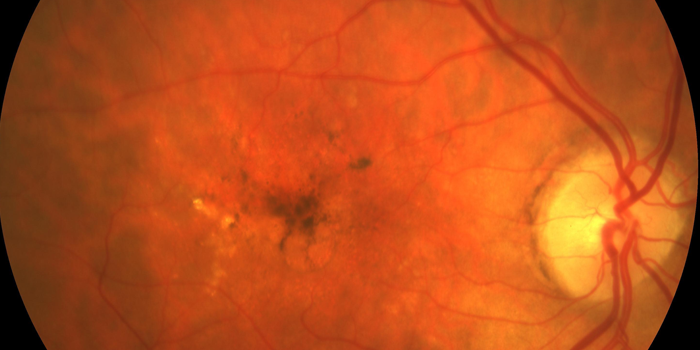
This is a Guideline from international experts who present the optimal treatment regimen for exudative degenerative diseases of the retina.
The aim was to review the Treat-and-Extend Regimens (TER) with anti-angiogenic agents in retinal diseases.
The Guideline, published in June, was written by 15 doctors who are global experts.
Dr. Jordi Monés is one of 15 international experts to have drawn up the Guideline “Treat-and-Extend Regimens with anti-VEGF agents in retinal diseases: A Literature Review and Consensus Recommendations”. The Guideline was published in the journal Retina on 12 June.
The starting point for this experts’ Guideline was the lack of consensus on the optimal regimen with anti-angiogenic agents, above all for exudative AMD, together with the lack of consensus on the optimal application of Treat-and-Extend Regimens (TER) in clinical practice. The article describes the evidence and the consequent development of a generic algorithm for the dosage of injections with anti-angiogenic agents, which are aimed at blocking the main “messenger” that causes these diseases to progress: the vascular endothelial growth factor, known as VEGF.
To do this, the 15 international experts developed a new TER algorithm — defined as a proactive regimen of individualised dosage — and which begins with monthly injections. These injections are continued until a clinical response is observed in the patient, determined in the main by Optical Coherence Tomography (OCT), followed by an increase in the intervals between injections, depending on the disease activity. It also considers exceptional situations, such as those patients for whom intra or subretinal fluid has yet to be resolved and provides guidance on how to act in each case and situation.
This new system both avoids the disadvantages of other regimens and includes its advantages in order to maintain over time the improvement obtained at the start of the treatment. At the same time, it avoids risks and favours sustainability, both for the patient and his/her family and for the health system. The aim is to arrive at a compromise between the advantages of the more proactive regimens such as the monthly fixed regimen and the more reactive regimens, such as the on-demand regimen. The aim is to avoid the disadvantages of both options.
Treat-and-Extend Regimens take the initiative on the disease, attacking it before a new outbreak in order to avoid the disadvantages of the on-demand regimen, where the disease takes the initiative and may cause irreversible vision loss. At the same time, they avoid the over-treatment that a fixed regimen brings to many patients.
In this way, it is possible to reduce the risks of side effects and the cost of treatments without losing efficacy on any account. In addition, on spacing out visits in the most responsive patients as the treatment does not cease to be applied in certain intervals, it makes it easier for the patients and the relatives that accompany them to carry out treatment and visits in the long term.


This experts’ Guideline confirms that the proactive treatment regimen for retinal diseases that the Institut de la Màcula has been at the forefront in applying for some years is the most effective option.
To halt the disease by minimising vision loss it is necessary to be able to make a very early diagnosis and treatment just after detecting the initial symptoms of the disease. Once the relevant tests have been carried out it is possible to administer the treatment, in this case through intravitreal injections.
In Dr. Monés’s view, the creation of this experts’ Guideline “reaffirms the good work of the Institut de la Màcula in recent years”, as “these techniques have been successfully applied in the Institut for some time, while the rest of the scientific community in Spain and Europe have been somewhat reticent. Now, with the creation of this experts’ guideline, this knowledge can be disseminated and consolidated”.
The team at the Institut de la Màcula recommends treating the pathology before reactivation occurs. “The sooner we find a solution, the less serious will be the consequences for patients” and “this is why it is advisable to administer the treatment in certain intervals even if the lesion remains apparently inactive”, Dr. Monés concludes.
This proactive application enables diseases like Age-Related Macula Degeneration to be treated more effectively. Therefore, once the initial symptoms of the disease are detected an immediate treatment must be applied to avoid the irreversible destruction of central vision in a short period of time, which may only be a matter of weeks or months.


