







Marc Biarnés participates in the creation of the new Clinical Practice Guide on chronic glaucoma
25/06/2013 ·
 новости
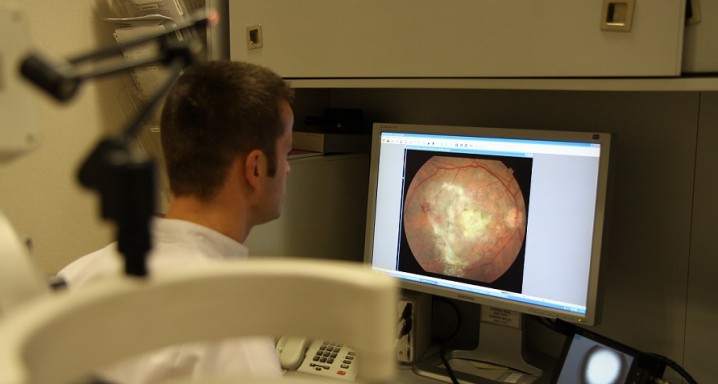
Promoted by the National Health System (SNS), the aim of updating the Clinical Practice Guide is to provide the specialist with tools which enable improved management of the disease by means of guidelines based on new scientific evidence.
Marc Biarnés, clinical trials coordinator at the Institut de la Màcula, says “advances made over recent years recommend a review of the management of the glaucoma patient. We now possess techniques which enable us to detect the disease early and carry out more reliable monitoring which helps us to slow its progression. And these innovations should be included in a new clinical practice guide.”
Chronic simple glaucoma or open angle chronic glaucoma is a disease which affects the optic nerve, which is responsible for transmitting vision from the eye to the brain. Damage to this nerve, therefore, leads to progressive sight loss. This pathology is both hereditary and related to ageing and in Spain it is prevalent in approximately 2-4% of the adult population.
Up to now, chronic glaucoma has been addressed principally through different procedures: eye drops, laser and/or surgery. In some cases, combined treatment is applied. Below are the main characteristics of each procedure:
- Drops: the ophthalmologist must decide which of the various types of drops is best for the patient. Some are used only once a day, others twice and some three or four times a day. It is important to follow the indications and to continue the treatment as required.
- Laser: applied in the surgery itself, it hardly has any side effects other than eye inflammation. Occasionally, this inflammation results in increased blood pressure but this is a transitory and treatable effect. According to the individual case, laser treatment should be complemented with other methods.
- Surgery: this would be required in some cases, above all when the patient is young. There are various types of surgery but all share the same aim: to increase the removal of the aqueous humor and slow the advance of the disease.
Chronic glaucoma has no symptoms until peripheral vision is already highly reduced and the patient refers to looking “through a tube” (“tunnel vision”). If the diseases progresses further it may lead to irreversible blindness.
For further information on the disease, see www.asociaciondeglaucoma.es


